
Choosing reliable Pharmaceutical Intermediates suppliers is not a routine purchasing decision. It directly affects product quality, manufacturing continuity, regulatory readiness, and patient safety. A dependable supplier provides more than competitive pricing. They offer consistent specifications, documented processes, and clear communication when unexpected issues arise.
Experienced procurement and quality teams examine each intermediate carefully. They review certificates of analysis, impurity profiles, batch records, stability data, and change-control procedures. Site audits can reveal practical details that documents may miss, such as labeling discipline, storage conditions, and cleaning standards. Traceability also matters. Every batch should connect clearly to its raw materials, production date, test results, and shipment history.
Small details matter.
A reliable partner follows appropriate GMP principles and supports transparent quality agreements. They should explain testing methods, provide representative samples, and respond promptly to technical questions. Their facilities, personnel, and documentation must support applicable international requirements. However, no supplier is flawless. A polished website does not prove manufacturing capability, and one successful shipment cannot confirm long-term consistency. This is where careful evaluation becomes essential.
Companies should compare supplier performance over time, not only during onboarding. Delivery reliability, deviation handling, complaint responses, and communication quality offer valuable evidence. Independent laboratory testing may also strengthen confidence when product risk is significant. Choosing carefully can reduce production interruptions and protect downstream quality. The process requires patience, technical judgment, and occasional reconsideration. That effort is worthwhile because dependable Pharmaceutical Intermediates suppliers help build a safer, more resilient, and more accountable supply chain.
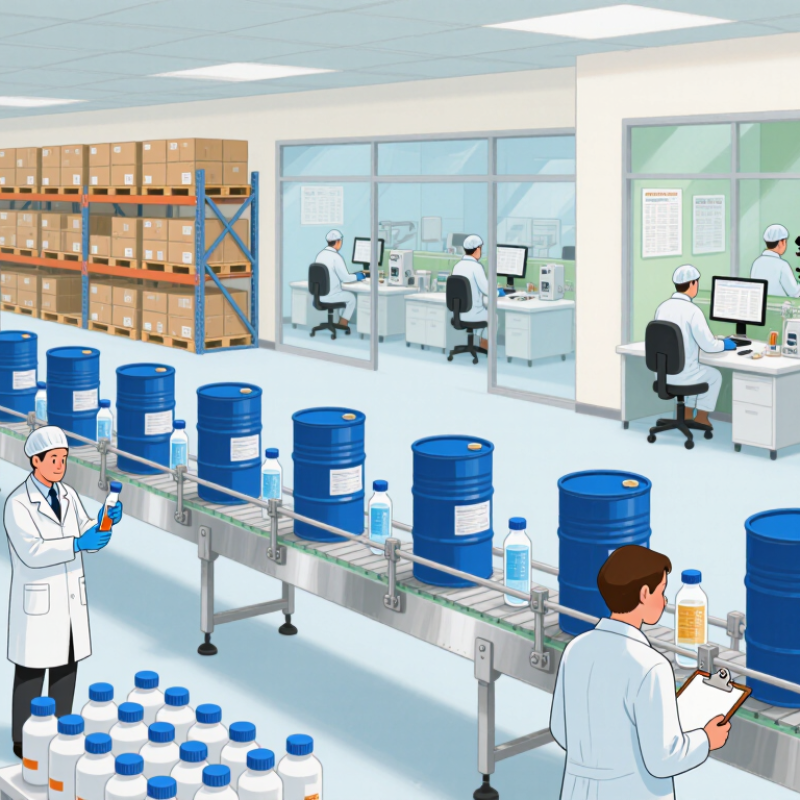
Pharmaceutical intermediates are chemical compounds formed during the multi-step production of an active pharmaceutical ingredient. They are not finished medicines. They are building blocks that must meet defined identity, purity, and stability requirements before moving to the next manufacturing stage. Some appear as powders, crystals, or clear liquids. Their physical form can affect storage, weighing, and processing.
In practical development work, an intermediate is judged by more than its name. Reliable documentation should show the batch number, manufacturing route, test methods, impurity profile, and storage conditions. A clear certificate of analysis helps, but it is not the whole story. Good suppliers also maintain traceability, controlled change procedures, and consistent communication when specifications shift. Small details matter, such as a sealed container, readable labels, and temperature records during transport.
Choosing a dependable supplier can reduce delays and unexpected rework. It can also support smoother scale-up from laboratory batches to commercial production. However, supplier quality is never something to assume. A polished document may still require technical review, additional testing, or an audit. That uncomfortable step is worth taking. Pharmaceutical intermediates influence the quality of the final active ingredient, even though patients never see them directly. Careful qualification, realistic specifications, and ongoing monitoring make the supply chain more dependable.
| Pharmaceutical Intermediate | CAS Number | Molecular Formula | Relative Molecular Mass | Typical Role in Pharmaceutical Manufacturing | Key Quality Attributes | Recommended Analytical Controls | Why Supplier Reliability Matters |
|---|---|---|---|---|---|---|---|
| 6-Aminopenicillanic Acid (6-APA) | 551-16-6 | C8H12N2O3S | 216.26 g/mol | A beta-lactam intermediate used as a core starting material for the preparation of semisynthetic penicillin derivatives. | Identity, assay, related substances, water content, residual solvents, particle characteristics, and microbiological quality where applicable. | HPLC or UPLC for assay and impurities; Karl Fischer titration for water; infrared spectroscopy for identity; gas chromatography for volatile residual solvents. | Consistent control of beta-lactam integrity and impurity profiles is important because variation can affect downstream reaction yield and the impurity profile of the active pharmaceutical ingredient. |
| 4-Aminophenol | 123-30-8 | C6H7NO | 109.13 g/mol | An aromatic amine intermediate used in the manufacture of several analgesic and antipyretic active pharmaceutical ingredients. | Assay, positional isomer content, oxidation-related impurities, water, residual solvents, color, and physical form. | HPLC for purity and related substances; infrared spectroscopy for identity; Karl Fischer titration for water; gas chromatography when volatile impurities are relevant. | Reliable suppliers help minimize oxidation products, isomeric impurities, and batch-to-batch color variation that may complicate purification and regulatory characterization. |
| 4-Nitrobenzoic Acid | 62-23-7 | C7H5NO4 | 167.12 g/mol | An aromatic carboxylic acid intermediate used in chemical synthesis and in the preparation of substituted benzamide and related pharmaceutical structures. | Assay, regioisomeric purity, moisture, residual solvents, heavy-metal limits where specified, and particle-size distribution. | HPLC for assay and related substances; infrared spectroscopy or nuclear magnetic resonance for structural confirmation; Karl Fischer titration for moisture. | A dependable source provides controlled regioisomer levels and traceable analytical data, reducing the risk of unexpected impurities in subsequent coupling or reduction steps. |
| 2-Mercaptobenzimidazole | 583-48-2 | C7H6N2S | 150.20 g/mol | A sulfur- and nitrogen-containing heterocyclic intermediate used in the synthesis of selected pharmaceutical and fine-chemical compounds. | Identity, assay, sulfur-related impurities, residual solvents, water, and control of the solid-state form when relevant to processing. | HPLC for purity; infrared spectroscopy and nuclear magnetic resonance for identity; elemental analysis when sulfur and nitrogen balance must be confirmed. | Supplier process control is important because sulfur-containing impurities can be difficult to remove and may influence odor, color, reaction selectivity, and downstream purification. |
| Piperonal | 120-57-0 | C8H6O3 | 150.13 g/mol | An aromatic aldehyde intermediate used to construct methylenedioxy-substituted pharmaceutical and specialty chemical structures. | Assay, aldehyde content, oxidation products, residual solvents, water, color, and storage stability. | HPLC or gas chromatography for assay and impurities; infrared spectroscopy for identity; Karl Fischer titration for water when required. | Controlled storage and packaging are essential because aldehydes may be sensitive to oxidation and environmental conditions, which can reduce yield in condensation reactions. |
| Ethyl 4-Chloroacetoacetate | 638-07-3 | C6H9ClO3 | 164.59 g/mol | A multifunctional halogenated ester used as a building block in the synthesis of heterocyclic and other pharmaceutical intermediates. | Assay, hydrolysis products, residual solvents, water, acidity, color, and stability during storage and transportation. | Gas chromatography for volatile purity; HPLC for nonvolatile impurities; infrared spectroscopy for identity; acid-value or related titrimetric testing where applicable. | Reliable manufacturing and temperature-controlled logistics help limit hydrolysis and degradation, supporting predictable reaction performance and safer process scale-up. |
| L-Phenylalanine | 63-91-2 | C9H11NO2 | 165.19 g/mol | A chiral amino-acid intermediate used in the synthesis of active pharmaceutical ingredients and other biologically active molecules. | Assay, enantiomeric purity, related amino acids, water, residual solvents, elemental impurities, and microbiological quality where applicable. | HPLC or chiral HPLC for assay and stereochemical purity; infrared spectroscopy for identity; Karl Fischer titration for water. | Consistent stereochemical purity is critical because the undesired enantiomer can affect biological performance, purification requirements, and the quality attributes of the final product. |
| N-Methyl-2-pyrrolidone | 872-50-4 | C5H9NO | 99.13 g/mol | A polar aprotic process solvent and, in some manufacturing routes, a process-related intermediate or reaction medium. | Assay, water, acidity or alkalinity, color, residual amines, and trace metal content where process requirements demand it. | Gas chromatography for assay and volatile impurities; Karl Fischer titration for water; colorimetric or titrimetric tests for selected chemical attributes. | Accurate specification control and suitable packaging reduce contamination and moisture uptake, helping maintain reaction reproducibility and compliance with solvent-residue limits. |