
Choosing a Microbiology Cabinet is not simply a matter of comparing prices, sizes, or attractive product photos. The right cabinet should match the work, the materials handled, and the level of protection required. A cabinet designed for personnel and sample protection may differ greatly from a clean bench or a basic laboratory enclosure. Confusing these categories can create serious safety gaps. It happens more often than expected.
This guide presents seven practical tips for making a more informed choice. It considers airflow performance, filtration, cabinet dimensions, visibility, noise, ergonomics, certification, and long-term maintenance. Reliable selection should begin with a documented risk assessment and current manufacturer specifications. Guidance from qualified biosafety professionals and recognized laboratory standards also deserves careful attention. Do not rely on a sales brochure alone. Check certification records, service availability, filter replacement procedures, and installation requirements. A cabinet may perform well in a quiet showroom but behave differently beside doors, vents, or busy workstations. Small details matter. The best choice also supports consistent user behavior, because even advanced equipment cannot correct poor technique or neglected maintenance. Some recommendations may seem obvious, yet real laboratories often overlook cleaning access, electrical capacity, or future workflow changes. That is worth reconsidering. With these seven tips, laboratory managers, researchers, and purchasing teams can compare options more responsibly and identify a Microbiology Cabinet that supports safer, more practical daily work.
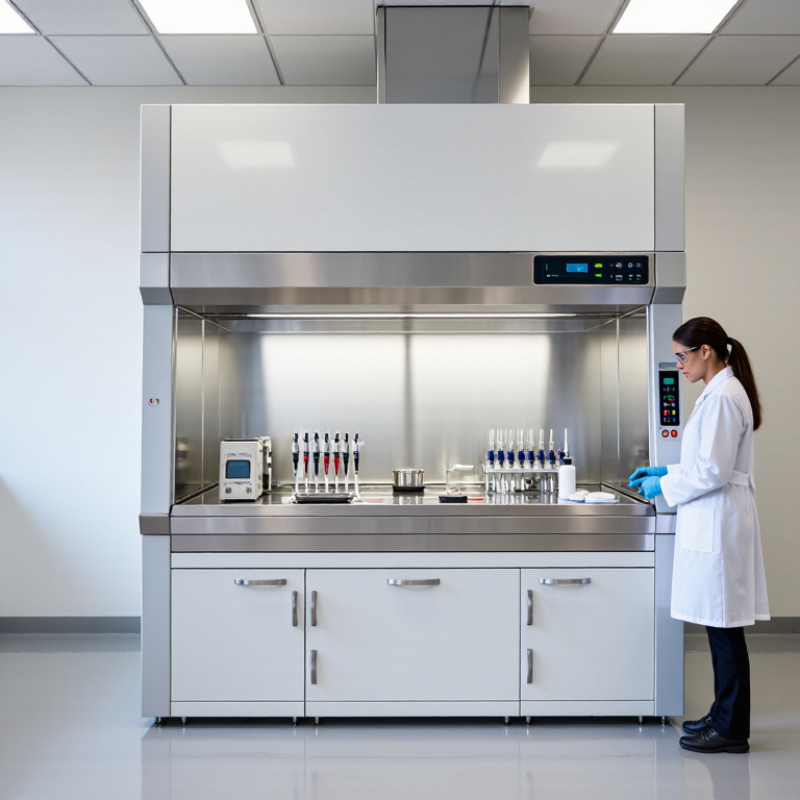
Choosing a microbiology cabinet begins with identifying the hazards, not comparing cabinet sizes. Describe the organisms, sample volumes, procedures, and possible aerosol generation. A sealed tube is different from vigorous mixing or centrifuge transfer. Ask whether the main concern is worker exposure, sample protection, environmental release, or all three. These needs guide the cabinet type, airflow pattern, and containment level.
Class I cabinets mainly protect personnel and the environment. Class II models can also protect the work and samples through controlled airflow. Class III systems provide a higher level of isolation for certain high-containment work. Do not choose by classification alone. Check whether the cabinet suits your facility, procedures, and risk assessment. If volatile chemicals are used, a recirculating cabinet may be unsuitable. Consult a qualified biosafety professional and follow applicable standards.
Look for verified airflow, HEPA filtration, clear alarms, easy decontamination, and accessible service areas. Confirm that installation testing and periodic certification are available locally. The room layout matters too. Doors, vents, and heavy traffic can disturb airflow. Staff training is essential. Keep the work surface uncluttered, and avoid blocking front or rear grilles. Small details matter. A cabinet can meet specifications yet perform poorly after careless installation. I have also learned that risk assessments need revision when protocols, organisms, or equipment change. A checklist helps, but it cannot replace observation, maintenance records, and honest review.

7 Tips for Choosing a Microbiology Cabinet
Match the Cabinet Type to the Intended Laboratory Procedures
Choosing a microbiology cabinet should begin with the procedure, not the room size. A cabinet for sterile cell culture may be unsuitable for aerosol-generating work. Define the biological hazards, sample volume, operator movements, and required protection before comparing models.
A Class I cabinet protects personnel and the surrounding environment, but it does not protect the exposed sample. It may suit procedures where product sterility is not essential. A Class II biosafety cabinet provides personnel, product, and environmental protection through controlled airflow and filtration. It is commonly selected for culture handling, inoculation, and other procedures involving infectious materials. A Class III cabinet offers a sealed workspace for higher-containment applications. Use it only after a formal risk assessment and facility review.
For non-infectious sterile preparation, a laminar-flow clean bench may protect the work area. It does not protect the operator from hazardous aerosols. That distinction is often missed. Never treat a clean bench as a biosafety cabinet.
Match the cabinet to the actual workflow. Check whether pipetting, vortexing, open-plate handling, or waste transfer occurs inside it. Confirm that the cabinet supports safe access without blocking the front or rear grilles. Certification should occur after installation and at defined intervals. Airflow alarms, sash position, filter condition, and decontamination access also deserve attention. Even experienced teams can choose poorly when they focus on specifications alone. Observe the procedure in real time. The best choice may become obvious.
7 Tips for Choosing a Microbiology Cabinet
Evaluate Airflow, Filtration, and Containment Performance
A microbiology cabinet should be selected through risk assessment, not appearance. The WHO Laboratory Biosafety Manual, 4th edition, stresses matching containment equipment to procedures, organisms, and exposure routes. Start by confirming the required cabinet class. Then review inflow and downflow specifications. For a Class II Type A2 cabinet, NSF/ANSI 49 specifies a minimum inflow velocity of 100 feet per minute, or approximately 0.51 meters per second.
Airflow must remain stable during normal work. Ask for test data covering velocity uniformity, alarms, sash position, and recovery after disturbance. A smoke visualization test can reveal turbulence near the front grille. Small changes matter. A misplaced bottle can disrupt the protective air curtain. The U.S. CDC and NIH BMBL, 6th edition, recommends field certification at least annually and after relocation. That certification should include inflow, downflow, HEPA filter integrity, and containment checks.
Filtration claims also need careful reading. HEPA filters are commonly rated at 99.97% efficiency for 0.3-micrometer particles under standardized conditions, according to U.S. federal filtration criteria. This figure does not guarantee safe containment. Gaps, damaged seals, or poor cabinet balance can bypass the filter. One uncomfortable truth: a cabinet may pass a filter test yet perform poorly during real handling. Request recent certification records, maintenance history, and documented alarm tests. Review noise, lighting, and ergonomics too. Operators who work awkwardly may create more airflow disturbances, even when the engineering data looks excellent.
Compare the typical minimum inflow velocity and HEPA filtration benchmark used for common microbiological safety cabinet classes. Class I cabinets are designed primarily for personnel and environmental protection, while Class II cabinets also protect the product through controlled vertical airflow. Class III cabinets provide the highest containment through a gas-tight enclosure and should be evaluated using manufacturer certification and site-specific risk assessment.
Choosing a microbiology cabinet starts with the work, not the catalog. Measure room width, door clearance, ceiling height, and service access. A cabinet may fit the bench and still block a doorway. It happens.
The CDC/NIH Biosafety in Microbiological and Biomedical Laboratories, 6th edition, recommends certification at least annually and after relocation. Installation planning therefore matters. Confirm exhaust requirements, electrical load, gas connections, heat output, and backup power needs before delivery.
Do not place the cabinet beside doors, busy walkways, or strong air vents. These drafts can disturb the protective airflow. NSF/ANSI 49 also provides recognized performance and field-certification requirements for Class II biosafety cabinets.
Ergonomics deserves equal attention. Check the working height, viewing angle, reach distance, noise level, and foot clearance. A deep cabinet can force shoulders forward during pipetting. That discomfort may become a daily error risk.
The WHO Laboratory Biosafety Manual, 4th edition, emphasizes risk assessment before selecting containment equipment. Match the cabinet’s internal width to real procedures, including racks, waste containers, and larger instruments.
Avoid choosing extra width without checking airflow and room ventilation. Bigger is not automatically safer. The final decision should be reviewed by qualified biosafety and facilities personnel, with installation records retained for future certification.
Choosing a microbiology cabinet requires more than comparing purchase prices. Certification is the first filter. The CDC/NIH BMBL recommends certification at least annually, and after relocation, repair, or filter replacement. Ask for testing against NSF/ANSI 49, using documented airflow, leak, and alarm results. A certificate without test details is weak evidence.
Tip 1: Match the cabinet to the hazard assessment. The WHO Laboratory Biosafety Manual, fourth edition, places risk assessment before equipment selection. Consider aerosols, organisms, procedures, and user exposure. Tip 2: Inspect safety features. Look for airflow alarms, sealed work zones, clear viewing panels, and accessible emergency controls. Small design details matter. A poorly positioned alarm may be ignored during a noisy procedure.
Tip 3: Calculate total cost over ten years, not one invoice. Include certification visits, filter replacement, electrical demand, service contracts, downtime, and room modifications. Tip 4: Request maintenance intervals and response times in writing. Tip 5: Check local service capability. Waiting weeks for a qualified technician can disrupt testing and create unsafe workarounds. Tip 6: Confirm the cabinet fits the room, doorways, benches, and exhaust plan. Tip 7: Compare noise and ergonomics, because fatigue encourages poor technique. I have seen teams focus on low energy use while overlooking certification travel costs. That comparison was incomplete. Industry guidance is valuable, but site-specific risk, workflow, and maintenance history should guide the final decision.
Precision Cable Assemblies
16830 Pheasant Drive
Brookfield, WI 53005
Phone: 262-784-7887
Fax: 262-784-0681