Choosing a PCA assembly supplier is not a price comparison alone. It is a decision about process control, traceability, and dependable delivery. The Semiconductor Industry Association reported that global semiconductor sales reached $627.6 billion in 2024, a 19.1% increase over 2023. That growth signals a busy electronics supply chain, where a weak supplier can create costly delays.
Look beyond a polished capability sheet. Ask how the supplier controls soldering, component traceability, inspection, and engineering changes. Request examples of production records, defect reporting, and corrective actions. Check whether its procedures align with relevant IPC standards, including J-STD-001 and IPC-A-610. Standards matter. So does consistent execution on the factory floor.
Quality-management expert W. Edwards Deming wrote, “Quality comes not from inspection, but from improvement of the production process” (Out of the Crisis, 1986). His principle applies directly to PCA assembly: inspection can find defects, but capable processes help prevent them. A site tour may reveal practical details, such as labeled component reels, controlled work instructions, and clean solder joints under magnification. Still, a tidy line does not prove long-term performance. Ask for evidence across multiple builds. Compare yield, responsiveness, and delivery history—not promises alone. Choosing well takes careful questions, and sometimes the best answer is to pause and verify.
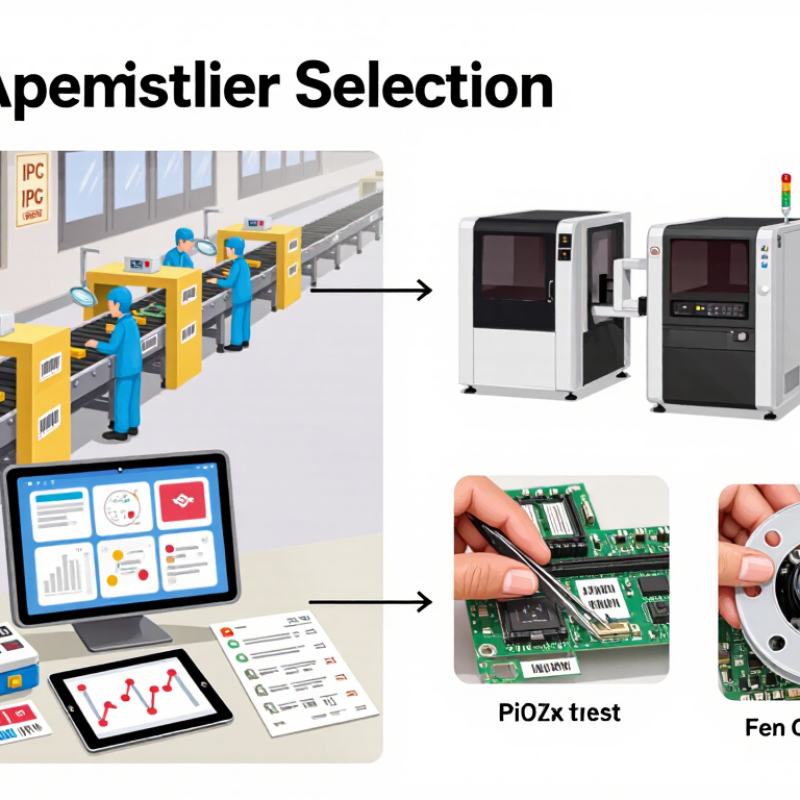
Before comparing PCA assembly suppliers, define the product, build stage, and expected volume. A prototype run of 50 boards needs different controls from a monthly production order of 10,000. List the board revision, component source, target yield, delivery schedule, and required inspection records. Include a bill of materials and assembly drawings, even if they still need refinement. Small details matter.
Set technical scope in measurable terms. Specify package types, board dimensions, layers, soldering methods, testing needs, and whether the supplier should source components. Grand View Research’s 2024 Global Printed Circuit Board Market report valued the market at about $72.3 billion in 2023 and projected 5.6% annual growth through 2030. That market-wide forecast is not a PCA demand estimate, but it underscores why capacity and lead-time assumptions deserve scrutiny. Ask suppliers how they handle shortages, substitutions, and engineering changes before approving a quote.
Separate essential requirements from preferences. For example, require traceable inspection records, but treat a specific report format as negotiable if the data remain complete. Define acceptance criteria for solder joints, functional tests, packaging, and defect handling. I would revisit the scope after a sample build; early estimates are often wrong. That is useful to admit. A clear scope makes supplier bids easier to compare and exposes missing information before production starts.

A reliable PCA assembly supplier should show how its process works, not just list equipment. Ask for evidence. Review sample inspection records, assembly instructions, and defect reports. A clear response shows whether the team understands component handling, soldering controls, and inspection criteria.
Check relevant certifications, but confirm their scope and expiry dates. A certificate alone cannot prove consistent workmanship. Numbers need context. Ask how operators record lot traceability and manage process changes.
Production capacity is more than a monthly output figure. Ask about current line utilization, typical changeover time, and available inspection equipment. For example, a supplier may quote high volume but lack room for a sudden pilot run. Request capacity estimates for your board size, component mix, and expected order pattern. Discuss how shortages, equipment maintenance, or rework affect delivery plans. Specific answers are more useful than broad promises.
It is easy to focus on a polished audit pack and overlook day-to-day communication. Test that communication with a small technical question. The answer may be imperfect; note whether the supplier acknowledges uncertainty and explains how it will verify the detail.
A dependable PCA assembly supplier should show how quality is built into each production step, not just promise a low defect rate. Ask for documented incoming inspection criteria, solder-paste controls, placement verification, and clear acceptance limits for solder joints. Look for records that identify who checks each stage and what happens when a result falls outside limits. Small details matter. A humidity log beside moisture-sensitive components can reveal whether handling rules are practical or merely written.
Test plans should match board function and risk. Depending on the assembly, checks may include automated optical inspection, in-circuit testing, or functional testing with defined pass/fail limits. Ask for sample reports, not only a list of available services. Reports should show the date, board revision, quantity tested, failures, and disposition. More testing does not automatically mean better coverage. Confirm that test fixtures exercise the signals and operating conditions your design actually uses. This part is easy to overlook.
Traceability should link component batches and lot codes to work orders and inspection results. Ask how quickly the supplier can identify affected boards if a component batch or process setting changes. Verify that records remain readable and available for an agreed retention period. Revision mix-ups can happen even with a careful team; ask how obsolete files are blocked and engineering changes approved. If answers rely on memory, ask for evidence. A polished dashboard helps, but the underlying records matter more.
How to Choose a PCA Assembly Supplier
Compare quotes by what they include, not just the unit price. Ask whether setup, inspection, programming, packaging, and freight are covered. A low quote may leave out testing or fixture costs, which can change the real budget. Request clear assumptions and a breakdown of any one-time charges. Small details matter.
Lead times should include more than assembly days. Check component availability, board fabrication, incoming inspection, and production capacity. Ask for a sample schedule showing order placement, build start, and shipment dates. Then compare that schedule with your launch needs and likely order changes. Dates need evidence. A supplier’s estimate is useful, but it is not a guarantee; keep a sensible buffer.
Communication and supply chain support become especially important when plans shift. Find out who owns your account, how quickly they respond, and how they report shortages or quality concerns. Ask whether they can share inventory status, flag component risks early, and discuss approved alternatives before a disruption becomes urgent. No supplier can prevent every delay. Still, clear updates and documented decisions make problems easier to manage. Weekly reports may help, though too many can become noise; agree on a format that gives your team useful facts without extra work.
Use this comparison framework to assess printed circuit board assembly (PCA) suppliers. Lead times and costs depend on board complexity, component availability, order quantity, testing requirements, and shipping; confirm all estimates against your specific bill of materials and design files.
| Evaluation Dimension | What to Compare | Evidence to Request | Potential Warning Sign |
|---|---|---|---|
| Total Cost | Compare the full delivered cost, including assembly, setup or tooling, inspection, testing, packaging, shipping, and any expedite charges. Check whether components are quoted separately or included. | An itemized quotation with assumptions, currency, quote validity, order quantity, and any excluded services or fees. | A low headline price with unclear setup charges, unlisted exclusions, or no explanation of how component substitutions affect the total. |
| Lead Times | Separate quotation turnaround, engineering review, component procurement, assembly, inspection, and shipping. Ask for both standard and expedited schedules. | A milestone-based schedule that identifies material dependencies, approval steps, and the point at which the delivery estimate begins. | A firm delivery promise before the supplier has reviewed the bill of materials, board files, and component availability. |
| Communication | Assess how quickly and clearly the supplier responds, who owns the project, and how production changes, shortages, and delays are escalated. | A named project contact, agreed update frequency, escalation route, and examples of production status reporting. | Unclear ownership, inconsistent answers, or delays in communicating issues that could affect schedule or quality. |
| Supply Chain Support | Review component sourcing, availability checks, traceability, shortage management, and the process for proposing alternate parts. Confirm that substitutions require customer approval. | A sourcing plan, component traceability information, shortage notifications, and a documented approval process for alternates. | Unapproved substitutions, unclear sourcing channels, or no advance notice when a component is unavailable. |
| Engineering Review | Check whether the supplier reviews the bill of materials, pick-and-place data, fabrication files, polarity, package details, and assembly constraints before production. | A documented design-for-assembly or manufacturability review, with questions and proposed changes recorded before work begins. | Production starts despite incomplete, inconsistent, or conflicting files without clarification. |
| Quality and Testing | Match inspection and test methods to the product, such as visual inspection, automated optical inspection, in-circuit testing, or functional testing where appropriate. | Written inspection criteria, defect-handling process, test coverage details, and applicable quality-system certifications. | Broad quality claims without defined inspection methods, acceptance criteria, or records. |
| Order Flexibility | Compare prototype support, minimum order quantities, repeat-order handling, engineering-change procedures, and the ability to scale production. | Written terms for sample builds, order changes, cancellation, rework, and production-volume transitions. | Unclear change fees or restrictions that are disclosed only after an order is placed. |
| Shipping and Support | Confirm shipping terms, packaging requirements, export documentation where applicable, delivery tracking, and support for nonconforming units. | A stated shipping method and responsibility, packaging specification, delivery documentation, and a return or corrective-action process. | Unclear responsibility for transit damage, missing paperwork, or post-delivery quality issues. |
Comparison tip: Score each supplier against the same project requirements and compare written quotations, schedules, and process evidence—not price alone.
A supplier’s sample should be more than a neat-looking board. Ask for a unit built from the proposed bill of materials, component sources, and revision. Check connector alignment, solder joints, polarity, and labeling under good light. Then compare the board against your drawings and assembly notes. Small differences matter. A substituted component or undocumented process change can make a sample unrepresentative.
Set acceptance criteria before testing. Define what the board must do, which measurements matter, and how defects will be recorded. Depending on the product, checks may include power-up behavior, programmed firmware, current draw, and functional test results. Request inspection records and traceability for the sample. A supplier’s explanation is useful, but recorded evidence is easier to review later. Not enough.
When the design is stable, run a small pilot build using the intended production workflow. Observe setup, inspection, test coverage, and how issues are reported. Track first-pass yield, rework, and recurring defects; a spreadsheet can reveal patterns that a single successful board hides. Ask the supplier to investigate failures and document corrective actions. A perfect sample is reassuring, not conclusive. Pilot builds can expose assumptions on both sides, and some will be yours. Notice whether the supplier raises concerns early, answers specific questions, and can repeat the build consistently.
Precision Cable Assemblies
16830 Pheasant Drive
Brookfield, WI 53005
Phone: 262-784-7887
Fax: 262-784-0681