
Choosing a conveyor partner can shape warehouse speed, product safety, and long-term operating costs. For global buyers, the decision involves more than comparing prices. A reliable Roller Conveyor Supplier should understand load weight, package dimensions, belt-free movement, warehouse temperature, and maintenance access. Small details matter. A noisy bearing can signal trouble.
Scott Deutsch, a recognized warehouse-automation executive, has stated, “Automation succeeds when it solves a measurable operational problem.” This principle applies directly to roller conveyor purchasing. Buyers should examine proven installations, engineering support, spare-parts availability, and response times. A supplier may offer an attractive quotation, yet weak after-sales service can create expensive downtime. That risk deserves attention.
This guide reviews ten Roller Conveyor Supplier companies serving international markets. It considers product range, customization, manufacturing capability, quality controls, delivery experience, and technical support. The selection is not a universal ranking. Different facilities need different answers. A light-duty conveyor may suit cartons, while pallet handling requires stronger frames, rollers, and drive systems.
We also look beyond polished brochures. Are specifications clear? Can the supplier provide drawings before production? Does the team explain limitations honestly? These questions reveal practical competence. Certification helps, but it does not replace installation experience. Some suppliers excel in modular systems, while others perform better on heavy-duty projects.
Global buyers should still verify every claim independently. Request references. Review warranty terms. Confirm local service coverage. The right supplier is not always the largest name. It is the partner that fits the product, facility, budget, and future operating plan. Sometimes, the best choice is less obvious.
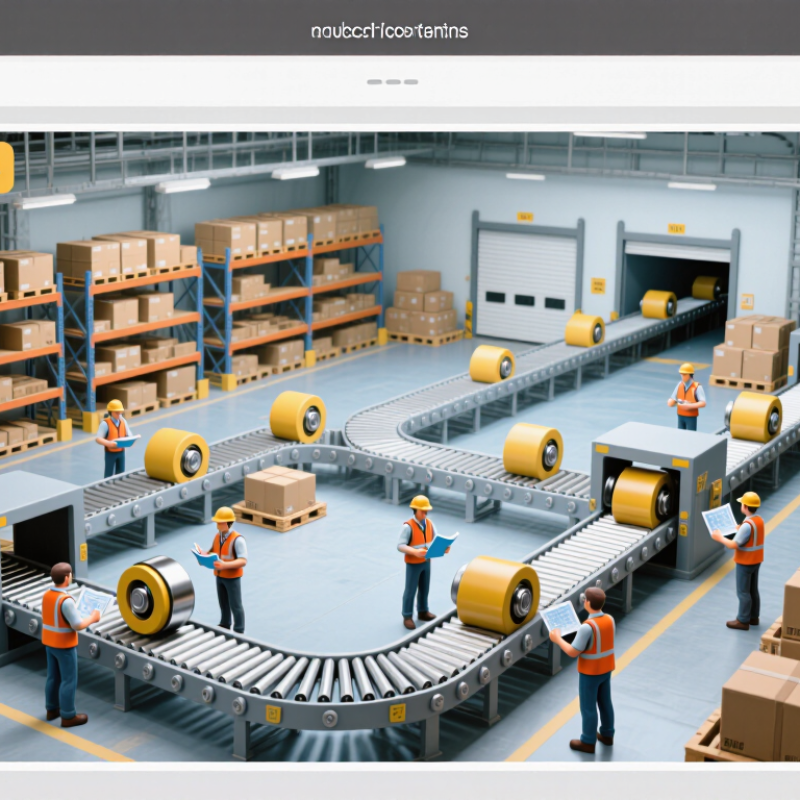
Top 10 Roller Conveyor Suppliers for Global Buyers
Defining Roller Conveyors and Their Main Industrial Applications
Roller conveyors move products across rotating cylinders fixed inside a supporting frame. Gravity, manual force, or powered drives can move each load. Their open structure allows quick inspection and easy cleaning around the conveying surface. Roller spacing, frame height, and load capacity must match the product carefully.
These systems serve warehouses, distribution centers, packaging rooms, and manufacturing plants. Gravity rollers suit cartons, totes, and pallets moving between workstations. Powered rollers handle heavier loads and controlled transfers. They also support accumulation, sorting, loading, and assembly operations. A steel pallet may require strong rollers, while small cartons need closer spacing. One design cannot solve every material-handling problem.
Tips: Check product weight, base shape, speed, and stopping needs before comparing suppliers. Ask for load tests and maintenance guidance. Review safety documentation, spare-part access, and installation support. Global buyers should also confirm electrical compatibility and local service coverage. A lower purchase price may hide weak bearings or difficult replacement procedures. That deserves careful questioning. Suppliers should explain testing methods, tolerances, and expected service conditions in clear language. Site measurements matter more than attractive catalog images. In practice, missed dimensions often create expensive adjustments after delivery.
| No. | Main Industrial Application | How Roller Conveyors Are Used | Typical Load Unit | Common Conveyor Configuration | Typical Roller Pitch | Drive Requirement | Key Supplier Selection Criteria |
|---|---|---|---|---|---|---|---|
| 1 | Receiving and Shipping Docks | Moves cartons, totes, and pallets between dock doors, staging areas, and storage zones. | Cartons, totes, pallets | Gravity roller conveyor or powered roller conveyor | Approximately 75–150 mm for cartons; heavier-duty spacing for pallets | Gravity for short, level-assisted movement; powered sections for controlled flow | Load capacity, corrosion resistance, dock integration, adjustable supports, and impact protection |
| 2 | Warehouse Pallet Handling | Transports unit loads between pallet storage, picking areas, wrapping stations, and dispatch points. | Standard pallets and skids | Heavy-duty chain-driven roller conveyor or pallet roller conveyor | Usually selected so several rollers support the pallet at all times | Motorized drive required for accumulation, incline movement, or high throughput | Rated load per pallet, frame rigidity, drive torque, safety guarding, and maintenance access |
| 3 | E-Commerce Order Fulfillment | Transfers picked items, cartons, and totes between picking, packing, sortation, and shipping zones. | Polymer totes, cartons, mailers | Motor-driven roller conveyor, zero-pressure accumulation, and flexible sections | Commonly about 50–100 mm for small cartons and totes | Zone-controlled motors or motorized rollers for product spacing and accumulation | Low-noise operation, variable speed control, barcode-system compatibility, and modular expansion |
| 4 | Parcel Sortation | Feeds packages to scanning, diverting, merging, and destination-routing equipment. | Parcels, cartons, polybags | Powered roller conveyor with merges, transfers, and pop-up divert units | Selected according to the smallest package footprint and stability requirements | Powered operation with sensors, controls, and synchronized divert mechanisms | Throughput, package-size range, tracking accuracy, sensor integration, and emergency-stop coverage |
| 5 | Packaging Lines | Moves filled cases, trays, and containers between filling, sealing, labeling, weighing, and palletizing equipment. | Cases, trays, cartons, containers | Stainless-steel or coated powered roller conveyor; accumulation sections where required | Typically based on container length, bottom condition, and required product stability | Powered drive is generally used for synchronized line movement | Washdown rating, hygienic design, belt or roller surface selection, line speed, and cleanability |
| 6 | Manufacturing and Assembly | Positions work-in-process materials, components, and finished products at assembly or inspection stations. | Bins, fixtures, totes, workpieces | Gravity roller conveyor, powered roller conveyor, or roller-top workstation conveyor | Chosen to prevent small parts from falling between rollers | Gravity for manual feeding; powered movement for automated or repetitive workflows | Ergonomics, workstation height, precision positioning, ESD requirements, and load stability |
| 7 | Food and Beverage Processing | Conveys packaged food, cases, trays, and containers through processing, inspection, and distribution areas. | Food cartons, plastic crates, bottles, cases | Stainless-steel roller conveyor or sanitary powered roller conveyor | Determined by package dimensions and hygiene-related drainage requirements | Powered drive for continuous lines, accumulation, and controlled transfers | Food-compatible materials, open-frame construction, drainage, washdown capability, and hygienic lubrication |
| 8 | Cold Storage and Refrigerated Logistics | Handles frozen or chilled cartons, totes, and pallets in temperature-controlled warehouses. | Frozen-food cases, insulated totes, pallets | Corrosion-resistant powered roller conveyor or heavy-duty pallet roller conveyor | Selected for reliable movement under low-temperature and condensation conditions | Powered drive is preferred for cold-room inclines, accumulation, and long conveyor runs | Low-temperature components, sealed bearings, corrosion resistance, insulation interfaces, and serviceability |
| 9 | Airport Baggage Handling | Transfers baggage between check-in, screening, sorting, make-up, and reclaim areas. | Suitcases, bags, bins | Powered roller conveyor with merges, transfers, curves, and control-system integration | Selected to support baggage bases while limiting snagging and instability | Powered and sensor-controlled operation is required for automated baggage routing | High availability, noise control, tracking integration, safety systems, and continuous-duty performance |
| 10 | Automotive and Heavy-Component Logistics | Moves engines, transmissions, metal components, pallets, and returnable containers through production facilities. | Steel stillages, pallets, bins, heavy components | Heavy-duty chain-driven roller conveyor or line-shaft roller conveyor | Usually wider roller diameter and closer support spacing for concentrated loads | Powered drive required for heavy loads, accumulation, transfers, and production-line synchronization | Load rating, shock resistance, frame strength, drive redundancy, guarding, and integration with automation |