
Choosing the right Beans Sorting Machine can determine product quality, labor costs, and buyer confidence. Global bean processors handle varied crops, including kidney beans, mung beans, chickpeas, and black beans. Each crop carries different challenges. Seed size, color variation, moisture, surface damage, and foreign material affect sorting performance.
This guide examines ten major types of beans sorting machines used by international buyers. It considers optical color sorters, belt sorters, gravity separators, screen cleaners, destoners, and integrated processing lines. It also explains where each machine performs best. A factory near a dry farming region may prioritize dust control and stone removal. A premium exporter may need camera accuracy for small discolorations. Practical selection matters more than impressive specifications. No machine wins every crop.
Our recommendations focus on processing experience, measurable machine features, and dependable supplier support. Important checks include throughput, sorting accuracy, rejection rates, power requirements, cleaning access, and spare-parts availability. Trial samples should represent real harvest conditions, not only clean laboratory batches. That detail is often overlooked. Installation training, calibration support, and maintenance response also influence long-term value.
Buyers should remain cautious with broad performance claims. Results can change with humidity, cultivar, operator skill, and feed consistency. A reliable Beans Sorting Machine should fit the complete production process, from pre-cleaning to final packing. This overview provides a practical starting point, while acknowledging that local testing remains essential.
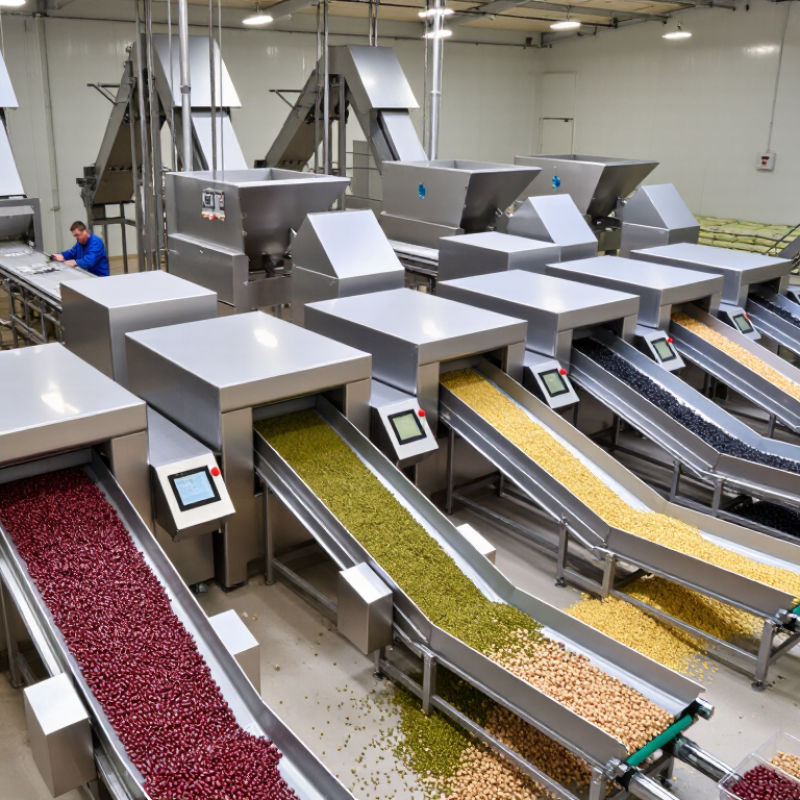
Top 10 Types of Beans Sorting Machines for Global Buyers
Bean sorting machines differ mainly by their sorting principle and sensing technology. The ten common types include rotary screens, vibrating sieves, length graders, gravity tables, destoners, air classifiers, color sorters, near-infrared sorters, hyperspectral sorters, and X-ray inspection machines. Each system removes a different problem. Screens separate beans by size, while length graders reject broken or unusually long pieces. Gravity tables use vibration and airflow to separate beans by density. Destoners remove stones and heavy particles. Simple, but effective.
Optical color sorters use cameras, lighting, and air jets to eject discolored beans. They can detect black spots, mold-like stains, insect damage, and uneven roasting shades. Near-infrared systems examine moisture and internal composition that visible cameras may miss. Hyperspectral technology reads wider spectral information, supporting more detailed quality decisions. Laser-based units can identify surface shape and texture with high precision. X-ray systems inspect density differences and hidden foreign materials. AI vision software can improve recognition when bean varieties and defect patterns change.
Real production needs more than impressive specifications. A clean sample, stable lighting, and accurate calibration strongly affect results. Operators should check throughput, compressed-air use, rejection accuracy, and cleaning access. Small beans may pass through a wide screen. Dark defects may disappear under poor illumination. No sorting principle is perfect. Even advanced equipment can make mistakes when beans vary widely in moisture or origin. Testing representative samples remains essential before purchase.

Bean processors usually combine several sorting methods because one machine cannot detect every defect. A color sorting machine removes discolored, mold-marked, or immature beans through camera-based inspection. A size grader separates beans by length, width, or thickness. A rotary screen sorter handles large volumes and removes undersized pieces efficiently. A drum grader offers gentle size classification for fragile beans. These machines improve uniformity before packaging. Small samples should be tested first.
A density separator divides beans by weight and airflow, helping remove hollow, insect-damaged, or low-density kernels. A gravity table performs a similar task with vibration and controlled air, while giving operators more adjustment control. An optical sorter detects subtle surface differences using visible-light cameras. A near-infrared sorter identifies internal or chemical differences that ordinary cameras may miss. A laser sorter highlights fine surface defects, cracks, and foreign particles. An X-ray sorter can detect dense contaminants and internal inconsistencies that remain invisible externally.
Each type has a specific role. In my experience, cleaning efficiency depends on calibration, feed consistency, and lighting stability. Operators must monitor dust buildup and belt or chute wear. Mistakes happen. Overly strict settings may remove valuable beans, while weak settings can lower product quality. Density changes between harvests also require new tests. A reliable system records rejection rates, sample results, and maintenance actions. The best configuration depends on bean variety, moisture, capacity, and the acceptable defect level.
Top 10 Types of Beans Sorting Machines for Global Buyers
Bean Varieties, Defects, and Suitable Sorting Applications
Bean sorting begins with variety, not machinery. Kidney, navy, pinto, mung, adzuki, and soybean lots behave differently. Size, skin color, surface texture, and moisture change the sorting target. FAOSTAT production data for 2022 placed global dry-bean output above 27 million tonnes. USDA Foreign Agricultural Service estimates for 2024/25 remain close to 28 million tonnes, although definitions vary. That scale makes small defect rates commercially important. Codex Alimentarius CXS 171-1989 identifies impurities, damaged grains, discoloration, and insect damage as key quality concerns. These are not identical problems.
A practical line may combine ten machine types: vibrating sieve, rotary screen, destoner, magnetic separator, gravity table, length grader, indented cylinder, mechanical color sorter, hyperspectral sorter, and AI vision sorter. Sieves separate split beans and oversized debris. Destoners remove field stones before processing. Gravity tables target light, hollow, or insect-damaged beans. Color systems detect black spots, mold-like discoloration, and mixed varieties. Hyperspectral units can examine internal quality indicators, but they cost more and need careful calibration. AI vision is promising, yet inconsistent lighting still causes false rejects.
Trial data should use the buyer’s actual bean variety. A pale defect on a white bean may disappear under weak lighting. A dark seed coat can hide surface damage. Moisture above the validated range can reduce separation accuracy. USDA grading guidance and mill testing practices both support representative sampling, repeated checks, and documented rejection rates. No sorter is perfect. In commissioning work, operators sometimes optimize purity and quietly lose valuable product. That trade-off deserves measurement, not assumption.
| Machine Type | Primary Sorting Principle | Bean Varieties Commonly Processed | Main Defects or Materials Removed | Best Processing Stage | Suitable Sorting Applications | Typical Capacity Range |
|---|---|---|---|---|---|---|
| Vibratory Air-Screen Cleaner | Vibration, perforated screens, and controlled airflow separate particles by size, shape, and aerodynamic behavior. | Kidney beans, black beans, pinto beans, navy beans, mung beans, chickpeas, lentils, and peas. | Stones, pods, leaves, stems, dust, broken pieces, undersized beans, oversized foreign matter, and light chaff. | Pre-cleaning | Receiving-line cleaning, removal of coarse impurities, and preparation before optical or gravity sorting. | Approximately 1–15 t/h, depending on screen area and crop condition. |
| Destoner | Airflow and a vibrating deck separate dense materials from beans according to specific gravity. | Dry beans, chickpeas, lentils, peas, soybeans, and other pulse crops. | Stones, glass, compact soil clods, metal fragments with higher density, and other heavy materials. | Pre-cleaning | Removing field stones before grading, optical sorting, bagging, or milling; especially useful for harvested pulses containing soil and gravel. | Approximately 2–12 t/h, depending on feed density and contamination level. |
| Gravity Separator / Gravity Table | Stratification on a vibrating, porous deck separates beans by density, weight, and aerodynamic response. | Kidney beans, navy beans, black beans, chickpeas, lentils, peas, and soybeans. | Immature beans, insect-damaged beans with reduced density, shriveled beans, lightweight kernels, and some partially damaged seeds. | Quality separation | Upgrading seed lots, separating sound beans from low-density material, and improving uniformity before final inspection. | Approximately 0.5–8 t/h, depending on deck width and target separation. |
| Vibratory or Rotary Screen Grader | Mechanical screening grades beans by width, thickness, or diameter through calibrated perforations. | Large kidney beans, cranberry beans, pinto beans, chickpeas, lentils, mung beans, and peas. | Oversized foreign matter, undersized beans, broken beans, split beans, and mixed-size fractions. | Sizing and grading | Creating uniform retail grades, preparing seed for planting, and matching bean size to cooking or packaging requirements. | Approximately 1–20 t/h, depending on screen configuration and product size. |
| Indented Cylinder Length Grader | Rotating indented pockets lift particles of a selected length while longer or shorter materials travel separately. | Kidney beans, navy beans, black beans, mung beans, lentils, peas, and mixtures containing seeds of different lengths. | Short broken pieces, long foreign seeds, weed seeds, elongated stems, and beans with an unsuitable length profile. | Precision grading | Removing length-based impurities after screening and separating seed or bean fractions with similar width but different length. | Approximately 1–10 t/h, depending on cylinder diameter and indentation size. |
| Magnetic Separator | Permanent magnets or electromagnetic systems attract ferrous metal from the product stream. | All dry beans and pulses, including kidney beans, black beans, soybeans, chickpeas, lentils, and peas. | Iron and steel fragments from harvesting, conveying, processing, or maintenance equipment. | Safety protection | Metal control before optical sorting, milling, packaging, and export shipment; normally used as a safety step rather than a cosmetic sorter. | Approximately 1–30 t/h, depending on magnetic design and product flow. |
| RGB Camera Color Sorter | High-speed cameras identify differences in visible color, shape, and surface appearance, followed by air-jet ejection. | Black beans, red kidney beans, pinto beans, navy beans, mung beans, chickpeas, lentils, and peas. | Discolored beans, mold-stained surfaces, insect damage, sprouted beans, cracked or broken beans, stones, glass, and contrasting foreign seeds. | Final optical sorting | Removing off-color beans, improving visual uniformity, and producing export or retail grades after mechanical cleaning. | Approximately 1–15 t/h per machine, depending on channel count, defect tolerance, and bean size. |
| NIR or Hyperspectral Sorter | Near-infrared or multispectral analysis detects differences in reflected wavelengths associated with composition and hidden quality attributes. | Chickpeas, lentils, soybeans, kidney beans, black beans, mung beans, and other pulses with measurable quality variation. | Some mold-related changes, internal damage, abnormal moisture or composition patterns, immature material, and defects not easily distinguished by visible color alone. | Advanced quality sorting | Separating visually similar beans with different quality characteristics and supporting specialized food-safety or quality-control programs. | Approximately 0.5–10 t/h, depending on spectral resolution, calibration, and product presentation. |
| Laser Sorter | Laser-based optical sensors examine surface reflectance, color, shape, and sometimes texture for precision ejection. | Kidney beans, black beans, pinto beans, mung beans, lentils, chickpeas, and peas. | Subtle stains, dark spots, yellow or green discoloration, surface mold, insect damage, foreign seeds, stones, and glass with contrasting optical signatures. | High-precision optical sorting | Fine defect removal where color variation is small or where high contrast detection is required after conventional cleaning. | Approximately 0.5–12 t/h, depending on sensor configuration and product cleanliness. |
| X-Ray Inspection Sorter | X-ray attenuation identifies density differences and internal or concealed foreign material that may not be visible on the surface. | Packaged or bulk kidney beans, chickpeas, lentils, peas, soybeans, and other dense pulses. | Stones, glass, dense metal fragments, mineral inclusions, compact soil, and some internal voids or density abnormalities. | Final safety inspection | High-risk foreign-material control, post-processing inspection, and quality assurance for export or packaged food lines. | Approximately 0.5–10 t/h, depending on belt width, product depth, and inspection sensitivity. |
Note: Capacity ranges are general industry planning values. Actual performance depends on bean variety, moisture content, feed uniformity, contamination level, machine configuration, and the required rejection standard.
Top 10 Types of Beans Sorting Machines for Global Buyers
Key Performance Factors for Comparing Bean Sorting Machines
Bean processors should compare sorting results, not attractive brochures. FAOSTAT’s 2023 crop database records global pulse production at roughly 100 million tonnes annually. That scale makes stable throughput essential. Measure tonnes per hour using your own beans, moisture range, and defect mix. A machine rated at 10 tonnes per hour may perform differently with dusty red beans or uneven black beans.
Sorting accuracy needs a clear definition. Ask for good-product retention, defect removal, and false-reject rates. These figures should come from controlled tests, not selected samples. Use mixed lots containing stones, discolored beans, insect damage, and broken kernels. The Codex Standard for Certain Pulses provides useful quality terminology, but commercial contracts may demand tighter limits. Tiny details matter. A one-percent loss can become expensive.
Sensor resolution, air-jet response, and channel stability also deserve attention. Inspect rejected beans after eight hours, not only after startup. Check compressed-air consumption, cleaning time, noise, and operator access. USDA Foreign Agricultural Service production reports show how strongly pulse supply varies by region and season, so adaptable settings are valuable for global buyers. In plant trials, we often focus too heavily on color accuracy. That is a weakness. Recovery rate, uptime, software usability, and service documentation may decide the real return. No machine wins every test. Require independent sample records before purchasing.
Top 10 Types of Beans Sorting Machines for Global Buyers
How Global Buyers Can Select the Right Bean Sorter
Selecting a bean sorter starts with the crop, not the machine catalogue. Bean size, color variation, surface damage, and foreign material determine the required sorting method. Color sorters suit visible defects, while size graders handle uneven shapes and dimensions. Density separators can remove lighter beans, but they need careful airflow adjustment.
Start with samples. Send beans from several harvest batches, including cracked, stained, and mixed lots. Ask suppliers to measure removal accuracy, good-product loss, capacity, and power use. A test using clean laboratory samples may look impressive. It may not reflect dusty warehouse conditions. Request results from realistic production trials.
Check the operator interface, cleaning access, spare-part supply, and local technical support. A high-speed machine can create bottlenecks if feeding equipment is too small. Moisture and dust also affect sensors and pneumatic systems. Buyers should compare the sorter with their available floor space, voltage, labor skills, and maintenance budget. Written performance data matters, but it needs context. Ask how results were measured and which defect levels were used. Some projects overlook seasonal changes. That mistake can become expensive. A practical decision often balances sorting accuracy, throughput, reliability, and total ownership cost rather than choosing the most advanced model.
Indicative operating-capacity ranges by machine type. Use throughput together with bean size, moisture, impurity level, required accuracy, and available floor space when selecting a sorter.
Capacity ranges are representative industry-level bands and can vary with bean variety, feed cleanliness, moisture, screen configuration, and product specifications. Request a sample test before making a final purchase decision.
Precision Cable Assemblies
16830 Pheasant Drive
Brookfield, WI 53005
Phone: 262-784-7887
Fax: 262-784-0681