Top 10 Solar Light Wind Chimes for Wholesale Buyers
Solar Light Wind Chimes combine decorative sound, soft illumination, and renewable energy in one compact product. For wholesale buyers, that combination creates practical retail potential. Customers may place them beside patios, balconies, garden paths, or small outdoor seating areas. Product details matter there. Battery capacity, panel efficiency, weather resistance, LED lifespan, packaging strength, and hanging hardware can influence returns and reviews.
The market context is encouraging. The International Energy Agency reported that global renewable capacity additions reached nearly 510 gigawatts in 2023, with solar power providing most new capacity (IEA, Renewables 2024). The International Renewable Energy Agency also continues to identify solar energy as a major driver of affordable, decentralized electricity. These reports do not measure wind chimes directly. However, they show why solar-powered consumer products attract sustained attention. GOGLA’s off-grid solar market reporting further highlights growing demand for small, accessible solar technologies across emerging markets.
This guide reviews the Top 10 Solar Light Wind Chimes for Wholesale Buyers through a commercial lens. It considers design appeal, lighting performance, durability, supplier consistency, and estimated resale value. A bright sample is not enough. Buyers should request production samples, inspect welds, test charging under weak sunlight, and confirm carton protection. Small details can become expensive problems. Some supplier claims may also sound stronger than the evidence supports. That deserves scrutiny. Seasonal demand, freight costs, and changing consumer tastes can affect profitability. The best selection is not always the cheapest one. It is the product that performs reliably after thousands of outdoor hours and still looks attractive on a store shelf.
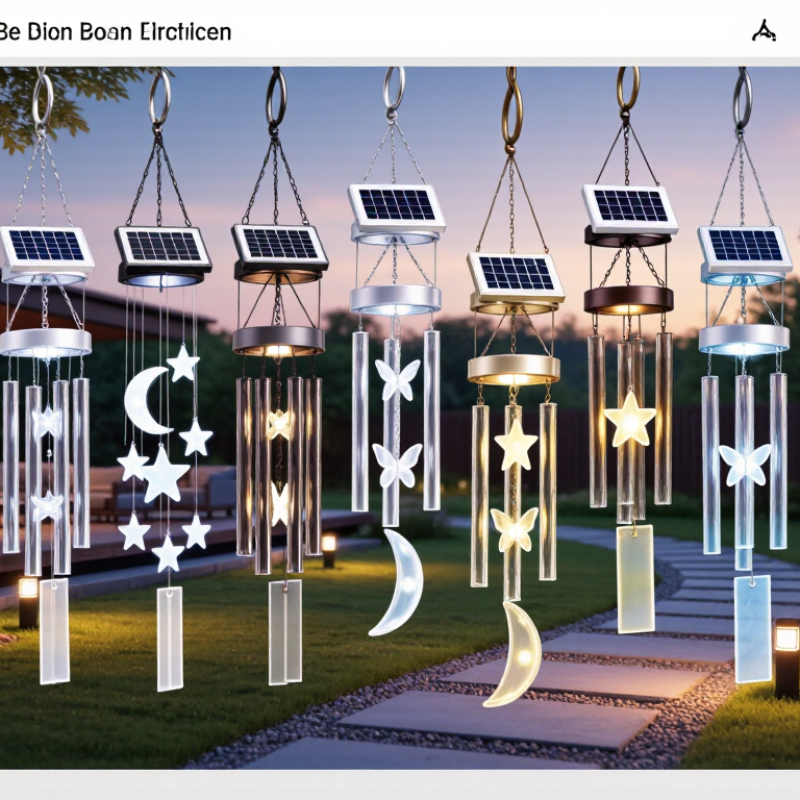
What Solar Light Wind Chimes Are and How They Work
Solar light wind chimes combine a small photovoltaic panel, a rechargeable battery, LED lights, and hanging tubes or ornaments. During daylight, the panel converts sunlight into electricity and stores some of it in the battery. At dusk, a light sensor usually switches the LEDs on automatically. The chime’s sound comes from moving parts, not from the solar system. A gentle breeze sets the tubes or pendants in motion.
The exact design varies. Some panels sit above the chime; others connect by a short wire and can be positioned toward brighter light. On a cloudy day, charging may be limited. Shade matters, too. A chime placed beneath a deep porch roof may glow briefly or not at all, even if its LEDs work properly. Battery capacity, panel size, and light settings all affect how long the display lasts after sunset.
For wholesale buyers, it helps to examine the panel finish, battery access, hanging hardware, and weather-resistant construction. Ask how long the unit needs to charge and how many hours its lights typically run under stated conditions. These figures are estimates, not guarantees. Wind and sunlight are unpredictable; product descriptions sometimes make that reality sound tidier than it is. Test a sample outdoors, then check whether the lights remain visible and the chime still moves freely after repeated use.
Key Features Wholesale Buyers Should Evaluate
For wholesale buyers, solar light wind chimes need to do more than look attractive in a product photo. Check the solar panel’s size and placement: a small panel tucked beneath a cap may struggle in shaded patios. Ask suppliers for charging and lighting test results under consistent conditions, including how long the lights stay on after a full charge. Real-world performance varies. That detail matters.
Review the materials, too. A sealed battery compartment, corrosion-resistant hooks, and weather-tolerant finishes can reduce returns after rainy seasons. Examine the chime tubes and hanging lines for tangles or sharp edges, especially if products will be handled in stores. Light color, brightness, and operating modes should be consistent across cartons; uneven LEDs can make a display feel cheaply assembled. Ask about replacement batteries and spare components before placing a large order. Packaging deserves a physical sample test, since thin inserts may let tubes collide during transit.
I would not judge durability from appearance alone.
A polished finish can hide weak joints, and supplier claims still need verification. Compare warranty terms, carton dimensions, and sample performance before committing to a broad assortment.
Top 10 Solar Light Wind Chime Categories for Bulk Purchase
Top 10 Solar Light Wind Chime Categories for Bulk Purchase
Wholesale buyers can compare ten useful categories: classic bulb, lantern, mason jar, floral, butterfly, hummingbird, geometric, coastal, color-changing, and mixed-material designs. Each suits a different shelf or outdoor setting. Lantern and mason jar styles offer a familiar glow, while glass pieces bring color to patios. Metal designs often feel sturdier, though they may produce sharper sounds in strong wind. Solar lighting has a growing market behind it: IRENA reported that global solar photovoltaic capacity reached about 1,419 gigawatts by the end of 2023. This figure describes the wider solar sector, not wind chimes, but it signals expanding familiarity with solar products.
For bulk orders, compare panel size, battery capacity, charging time, and stated illumination hours. Ask suppliers for test results and sample units; a small panel can struggle beneath a shaded porch roof. Check whether the light module and battery can be replaced. Also inspect hooks, string strength, and glass packaging. A low unit price can become costly when transit breakage is high. The ten categories above are a starting point, not a proven ranking. Buyers should test them against local weather and customer preferences.
Tips: Order samples from several categories. Charge them in direct sunlight, then check brightness after dusk. Record the results. Confirm carton dimensions and replacement-part availability before committing to a large order. One attractive design may sell slowly; that is easy to overlook when reviewing catalog photos.
Planning scores are illustrative, not market-sales or survey data. Use them as a starting point for comparing product categories; validate demand with your own buyers and sales data.
How to Compare Quality, Pricing, and Supplier Reliability
For wholesale buyers, compare solar light wind chimes under the same conditions. Ask suppliers for panel output, battery capacity, charging time, and rated operating hours. Then test samples outdoors: note how the lights perform after cloudy days, and whether the chime’s finish withstands rain and repeated handling. Small details matter. A loose solar panel or weak hanging loop can turn a low unit price into costly returns.
Check the evidence behind performance claims. The National Renewable Energy Laboratory’s review of photovoltaic degradation found a median rate near 0.5% per year across studied systems; this is useful context, not a guarantee for small decorative panels. Request product-specific test methods and warranty terms. IRENA reported that global weighted-average utility-scale solar PV electricity costs fell 12% in 2023. That trend does not prove a garden light should be cheaper, but it makes component and quote comparisons worth examining. Compare like with like.
Supplier reliability needs its own checklist. Request sample lead times, production capacity, packaging specifications, and written procedures for handling defects. Verify that the quoted price includes the same battery, panel, accessories, and carton strength across suppliers. Ask for recent inspection records, not only a polished catalogue. I have seen price comparisons go wrong when buyers overlook replacement parts or seasonal shipping delays. It is an easy mistake. A clear sample approval and a small trial order can reveal gaps before a large purchase.
Ordering, Customization, and Quality Control Considerations
For wholesale buyers comparing the top 10 solar light wind chimes, begin with a clear order specification. Record the quantity, packed dimensions, carton count, and requested delivery window. Ask whether solar panels, batteries, hooks, and instructions are included. Small omissions can disrupt receiving plans. Request a production sample before confirming a large order. Check its chime tone outdoors, where wind and nearby traffic may change what sounds pleasant. A quiet showroom test is not enough.
Customization should be specific, not merely visual. Confirm color references, logo placement, cord length, and packaging artwork in writing. Ask how changes affect unit price and lead time. For quality control, agree on checks for charging, illumination, hanging strength, and finish consistency. Test several pieces from different cartons, not only the sample. A dusk test helps reveal uneven lights; a gentle pull can expose weak joints. Still, one inspection cannot predict every failure. Set an acceptable defect rate and a remedy process before production, and keep dated photos of approved samples. Even careful plans miss details sometimes. That is worth reviewing before the next order.