Why Choose a Flavored Air Pen for Global Sourcing?
Global sourcing has changed how buyers evaluate a Flavored Air Pen. Price still matters, but it is no longer the only deciding factor. Reliable sourcing requires stable materials, repeatable flavor performance, clear specifications, and documented quality checks. A factory sample may smell attractive in one room. It must perform consistently across thousands of units.
Don Norman, a leading human-centered design expert, reminds product teams, “Good design is actually a lot harder to notice than poor design.” This principle fits the Flavored Air Pen market. Buyers should examine mouthpiece comfort, airflow consistency, battery protection, packaging accuracy, and ingredient transparency. Small details become visible when products reach different climates and transport conditions.
Responsible suppliers should provide batch records, material declarations, testing information, and traceable production processes. They should also explain whether the product contains nicotine, stimulants, medication, or other regulated substances. A compliant sourcing plan must respect the destination market’s product, labeling, advertising, and consumer-safety requirements. Do not accept vague promises.
The process is not perfect. Supplier documents can be incomplete, and testing results may require independent verification. That is not a reason to stop. It is a reason to ask better questions. A practical audit may include factory photographs, sample comparisons, packaging inspections, and pre-shipment checks. For global buyers, the best Flavored Air Pen partner is not simply the cheapest manufacturer. It is the supplier that communicates clearly, corrects defects quickly, and supports evidence-based decisions.
What Is a Flavored Air Pen?
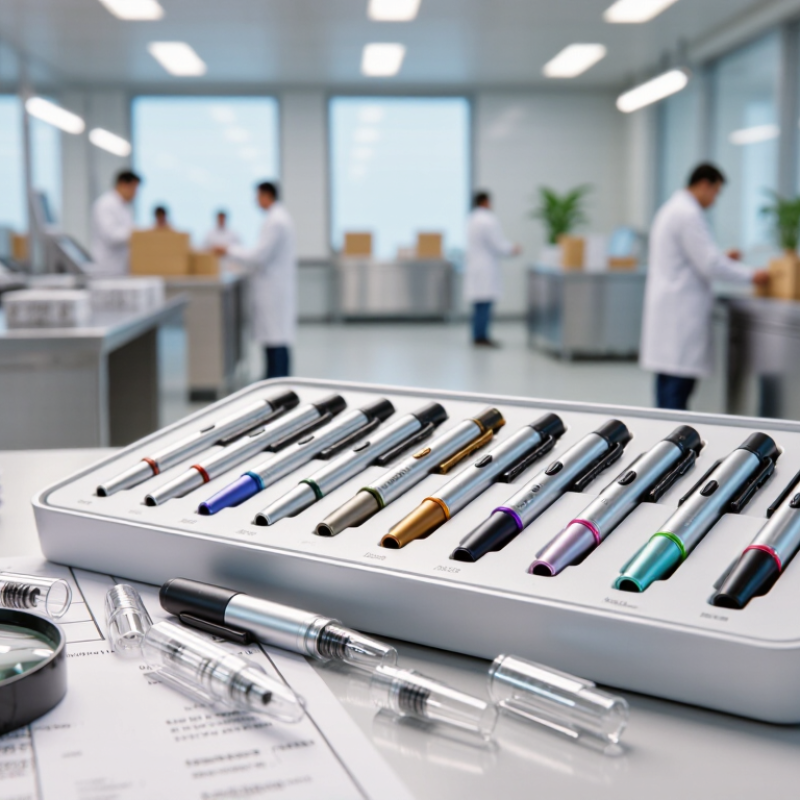
A flavored air pen is a compact, battery-powered device designed to deliver scented airflow. It usually moves air across a food-grade aroma insert or liquid-free flavor chamber. Unlike a medical inhaler, it is not intended to treat symptoms. Unlike a conventional vapor product, a compliant model should contain no nicotine, tobacco, controlled substances, or therapeutic ingredients.
The category remains fuzzy. That matters for global sourcing. The Global Wellness Institute valued the wellness economy at $5.6 trillion in 2022, showing strong demand for personal wellness products. However, this figure does not prove that flavored air pens are safe or medically effective. Suppliers should provide material declarations, allergen information, battery test records, and airflow performance data. Small details count. A pen should feel light, produce consistent airflow, and avoid leaking during a simple bag test.
Regulatory treatment can differ sharply between markets. The World Health Organization reports that electronic nicotine delivery systems face varied controls worldwide, even when products make similar claims. A flavored air pen should therefore avoid nicotine language, therapeutic promises, and youth-oriented presentation. Buyers can request ISO 9001 quality records, UN 38.3 battery transport evidence, and independent laboratory reports. I would also check the aroma formula twice. “Food-grade” does not automatically mean suitable for inhalation. That distinction is easy to miss, and it deserves careful technical review.
How Does a Flavored Air Pen Work?
A flavored air pen usually works through controlled aerosolization, not combustion. When the user draws on the mouthpiece, an airflow sensor activates a small battery. The battery powers a coil or mesh element, which heats a liquid containing approved flavor compounds and a carrier. The liquid becomes a fine aerosol, then cools before reaching the mouth. Some models use ultrasonic atomization instead. The word “air” can mislead.
The formulation matters more than the sweet profile. Food-grade flavoring is not automatically safe for inhalation. A 2018 National Academies report found that e-cigarette aerosol generally contains fewer toxicants than cigarette smoke, but it is not harmless. Testing should examine carbonyls, metals, particle size, and flavor stability after heating. That testing is often missed.
For global sourcing, verify the reservoir material, coil consistency, battery protection, leakage rate, and batch records. WHO’s 2023 global tobacco report recorded 34 countries banning e-cigarette sales, while product definitions differ across jurisdictions. This creates a practical sourcing problem: a nicotine-free air pen may still face inhalation-product rules. Market reports also group air pens with broader vapor-device categories, making headline figures difficult to compare. Suppliers should provide independent laboratory results, transport documentation, and clear use instructions. No report replaces local legal review.
Why Choose a Flavored Air Pen for Global Sourcing?
How Does a Flavored Air Pen Work?
A flavored air pen is designed around a simple airflow path: air enters through the inlet, passes through a flavor medium, and exits through the mouthpiece. For context, a typical resting adult breath is approximately 500 mL, with about 12 breaths per minute and a minute ventilation of approximately 6 L. These physiological reference values help suppliers evaluate airflow capacity, draw resistance, and flavor-delivery consistency during product development.
Reference values: standard resting-adult respiratory physiology averages; actual performance varies by user, device design, and operating conditions.
Which Features Matter in Global Sourcing?
Why Choose a Flavored Air Pen for Global Sourcing?
Which Features Matter in Global Sourcing?
A flavored air pen should be judged by more than its appearance. For global sourcing, compliance documents, material safety data, and test reports matter from the first quotation. Suppliers should clearly identify every ingredient used for the flavor system. They should also explain how production follows the destination market’s rules. A pleasant scent is not enough.
Consistency is critical. Each pen should deliver a similar airflow, flavor profile, and operating time. Ask for batch records, sample approval procedures, and quality inspection standards. Battery safety also deserves close attention. Protective circuits, secure charging designs, and transport documentation can prevent costly delays. Small details matter.
Packaging needs practical thinking. It should protect the product during humid sea transport and repeated warehouse handling. Clear labels should include usage instructions, warnings, batch codes, and recycling information when required. Suppliers with traceable production can respond faster when a defect appears. That builds trust.
Do not ignore customization limits. Some factories promise unlimited options, but their tooling, testing, or minimum order quantities may tell a different story. A lower price can hide unstable materials or weak after-sales support. This is where sourcing teams should slow down. Review samples more than once, and test them under realistic conditions. Even a strong supplier may need improvement. A transparent partner will admit it.
What Are the Benefits for International Buyers?
For international buyers, a flavored air pen can offer a lighter, more adaptable sourcing option. It may deliver sensory variety without nicotine or medicinal claims. That distinction matters. Buyers must confirm the product’s intended use in each target market.
Industry data supports careful category planning. Grand View Research estimated the global e-cigarette market at about USD 18 billion in 2023, with continued growth projected through 2030. However, flavored air pens are not automatically e-cigarettes. Classification depends on ingredients, heating methods, claims, and local regulations. The World Health Organization also emphasizes strict controls for inhaled consumer products. Buyers should request ingredient specifications, safety documents, factory quality records, and independent laboratory testing. A sample should match the final batch, not only the sales photograph. That sounds obvious, yet sourcing teams sometimes overlook it.
Tips: Compare three samples before negotiating volume. Check flavor consistency, leakage, battery safety, packaging language, and barcode requirements. Ask for batch coding and production dates. Use an inspection company when the order is large. The International Trade Centre recommends stronger supplier verification and documentation for cross-border purchasing. Still, reports cannot replace practical testing. A pleasant first sample may perform poorly after transport, heat exposure, or extended storage. Build those conditions into the approval process. Cost savings are useful, but compliance failures can erase them quickly.
How Can Buyers Evaluate Suppliers and Compliance?
Why Choose a Flavored Air Pen for Global Sourcing?
How Can Buyers Evaluate Suppliers and Compliance?
Choosing a flavored air pen for global sourcing requires more than attractive aromas and a low quotation. Buyers must define the product legally in each destination. It may be regulated as a consumer inhalation device, cosmetic, wellness product, or another category. Classification changes testing, labeling, advertising, and import duties. The WHO Global Report on Trends in Prevalence of Tobacco Use 2000–2030 (2024) projects about 1.2 billion tobacco users by 2030. That scale explains why regulators examine inhaled products closely, even without nicotine. Claims need restraint. “Relaxation” is safer than an unverified medical promise.
Supplier evaluation should begin with traceability. Request legal registration, factory details, ownership information, insurance, and recent independent audit records. Verify ISO 9001 systems, but never treat certification as proof of product safety. Ask for ISO/IEC 17025-accredited laboratory reports covering emissions, contaminants, material migration, battery safety, and flavoring composition. Match every report to the actual model, lot, and production date. The European Chemicals Agency’s 2023 enforcement project found 23% of inspected products breached chemical-law requirements. That figure is a warning, not a universal failure rate. Require batch samples before purchase. Test again after scale-up.
Contracts should define restricted substances, labeling languages, recall duties, change notification, and sample retention. Inspect packaging with a real drop test. Check seals, charging protection, and child-safety features where required. Small details matter. A supplier may provide perfect documents yet substitute a component later. Buyers should control that risk through independent sampling and periodic factory audits. Approve cautiously, document every decision, and review compliance whenever formulas, factories, or destination rules change.